

Overview
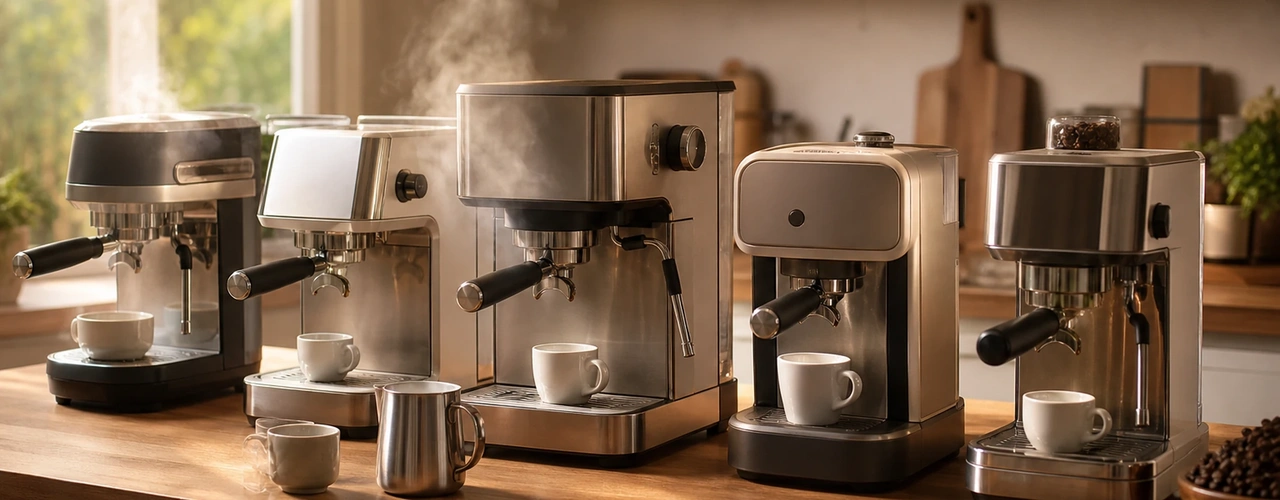
Choosing the best home espresso machines in 2026 is harder than it looks, because listings often repeat the same big numbers while leaving out what matters for daily coffee. You want a steam wand that textures milk properly, a machine that fits your counter, and a routine you will not abandon after a week. This comparison looks at five semi-automatic machines using three criteria: how quickly each is ready to brew, how much control it gives over the shot and the milk, and how much space and cleanup it asks for. Only specs confirmed across several sources are used, and anything uncertain is left out.
| Product | Rating | Best For | |
|---|---|---|---|
| CASABREWS CM5418 Compact Espresso Machine (trending product) | ★ 4.3/5 (8,458) | Beginners wanting a gauge | View → |
| Breville Bambino Espresso Machine BES450BSS | ★ 4.0/5 (2,740) | Fast heat-up, small kitchens | View → |
| De'Longhi Dedica Espresso Machine EC680 | ★ 4.0/5 (4,885) | Very narrow counters | View → |
| De'Longhi Classic Espresso Machine with Milk Frother | ★ 4.5/5 (158) | Simple everyday milk drinks | View → |
| Gaggia Classic Pro Espresso Machine RI9380 | ★ 4.3/5 (207) | Hobbyists who enjoy tinkering | View → |
The Bambino pairs a very short heat-up with a compact body and a manual wand that teaches milk texturing, and its specs are consistent across listings. Choose the Gaggia instead if you want a 58mm portafilter.
Check Price on Amazon →CASABREWS CM5418 Compact Espresso Machine (trending product)

The CASABREWS CM5418 is a compact semi-automatic espresso machine with a 20 bar pump rating, a built-in pressure gauge and a steam wand on a swiveling joint. Its removable water tank is listed at about 34 ounces, enough for several drinks between refills. It suits first-time buyers who want a gauge to watch, milk drinks and a small footprint without moving up to a larger machine. Heating power appears as 1300 or 1350 watts depending on the listing, so check the box before relying on either number. The trade-offs are practical: buyers often mention a learning curve with grind size, dose and milk texture, and a Plus variant with cold brew is sold under a similar name, so confirm the exact model before ordering.
Breville Bambino Espresso Machine BES450BSS

The Breville Bambino BES450BSS is a small semi-automatic machine with a 54mm portafilter, a 15 bar pump rating and a ThermoJet heating system that the maker says is ready to brew in about 3 seconds. Its steam wand is manual, so you texture milk yourself rather than relying on an automatic setting. It suits people who want fast mornings, a tiny footprint and a stainless finish, and who are willing to learn milk steaming. Listings mention both pressurized and non-pressurized baskets, which lets beginners start simply and move to freshly ground coffee later. The trade-offs are the smaller 54mm basket compared with the 58mm size used on larger machines, and wattage figures that differ by region, so check your local listing.
De'Longhi Dedica Espresso Machine EC680

The De'Longhi Dedica EC680 is a slim semi-automatic machine with a 15 bar pump rating and a thermoblock heating system, and the maker describes it as ready to brew about 40 seconds after switching on. Its body is only around 15 cm wide, which makes it a good fit for small kitchens and shared counters. A steam wand handles milk, and European listings give the water tank as about 1 litre. It suits apartment dwellers who want espresso and cappuccino without a bulky machine. The trade-offs come from the narrow build: a compact tank means more frequent refills, and the manual steam wand takes practice to master. Colors vary by listing, with a metallic EC680M sold alongside black and red versions.
De'Longhi Classic Espresso Machine with Milk Frother

The De'Longhi Classic Espresso Machine with Milk Frother is a semi-automatic machine aimed at buyers who want a familiar, simple setup for espresso, cappuccino and latte. Listings under this model name conflict on details such as wattage and tank size, so only the broad features are stated here: a 15 bar pump rating and a manual milk frother that mixes steam with milk. It suits casual drinkers who want one machine for milk drinks without a steep learning curve. The main trade-off is uncertainty: because the name is generic and specs vary between listings, you should confirm the exact model number, tank size and portafilter type before buying, and compare it against the other machines here on size and steam wand style.
Gaggia Classic Pro Espresso Machine RI9380

The Gaggia Classic Pro RI9380 is a semi-automatic machine built around a 58mm portafilter, the size used on commercial machines, which opens up a wide range of baskets and accessories. Its pump is rated at 15 bar, but extraction pressure is limited to about 9 bar, and listings describe a top-loading water reservoir of roughly 2.1 litres and a commercial-style steam wand. It suits hobbyists who want to learn dialing in, grind adjustment and milk texturing, and who may later want to modify or upgrade it. The trade-offs are a larger footprint than the compact picks here, and buyers often mention waiting for it to warm up and a steeper learning curve, especially around temperature and steaming.
Conclusion
Choose the CASABREWS CM5418 over the others if you want a visible pressure gauge, a small footprint and an easy entry into milk drinks. It is a gentler start than the Gaggia, though it offers less room to grow than a 58mm machine. Read More →
Choose the Breville Bambino if speed and size matter most: its ThermoJet system is described as ready in about 3 seconds, quicker than the Dedica's roughly 40 seconds. Pick it when you will steam milk by hand regularly and want a compact body. Read More →
Choose the De'Longhi Dedica EC680 if counter width is your main limit. At about 15 cm wide it is very slim and suits tight kitchens better than the Gaggia, though its roughly 1 litre tank is much smaller than the Gaggia's 2.1 litres. Read More →
Choose the De'Longhi Classic with Milk Frother if you prefer a simple machine for milk drinks and have verified the model details yourself. Because its listings conflict more than the others, check the model number first; otherwise the Bambino or Dedica are better documented. Read More →
Choose the Gaggia Classic Pro if you want to learn espresso properly and value a 58mm portafilter and a roughly 2.1 litre tank. It asks for more patience than the Bambino or CASABREWS, but it gives you more room to grow. Read More →
Frequently Asked Questions
Which of these espresso machines heats up fastest for busy mornings? +
The Breville Bambino, whose ThermoJet system is described as ready to brew in about 3 seconds. The De'Longhi Dedica is described as ready after roughly 40 seconds, and buyers often mention a longer warm-up on the Gaggia Classic Pro.
What is the difference between 15 bar, 20 bar and 9 bar on espresso machines? +
Bar figures on listings usually describe the pump rating, not the pressure at the coffee. The Gaggia, for example, has a 15 bar pump but limits extraction to about 9 bar. A higher number on the box does not by itself mean better espresso.
Which machine in this comparison suits a small kitchen best? +
The De'Longhi Dedica is about 15 cm wide and suits tight counters well. The Breville Bambino and CASABREWS CM5418 are also compact, while the Gaggia Classic Pro has a larger footprint than the compact picks.
Do I need a larger portafilter like 58mm to make good espresso? +
Not to begin with. The Bambino uses a 54mm portafilter and suits many home users, while the Gaggia Classic Pro uses 58mm, which offers a wider choice of baskets and accessories for people who like tinkering.
Which of these machines is best for learning to steam milk? +
The Bambino, Dedica, Gaggia and CASABREWS all use hand-operated steam wands, so you control the milk texture yourself. Expect practice with any of them; buyers often mention a learning curve with milk steaming.